
How to Read Tarot – The Complete Beginner’s Guide
By Luna García · updated November 3, 2026 · 20 min read
Reading tarot doesn’t take psychic gifts or 78 memorized meanings. You need 1 deck you like, 1 open question and 3 cards. Look at the pictures first, read the 3 cards as one short story and write down what you notice. That’s a real reading and you can do your first one tonight.
It’s probably late. Maybe you just pulled a card that unsettled you or a deck has been sitting in your drawer for months, waiting for you to “feel ready.”
Here’s the truth nobody tells beginners: there is no ready. There is only starting. Tarot is a skill, not a gift. It’s like learning a language or an instrument, only faster. Most people can do a meaningful reading for themselves within their first hour.
This guide walks you through everything in plain words. No gatekeeping, no vague clichés and no fear. Just clarity.
What Tarot Actually Is and What It Isn’t
Let’s clear up the question people quietly google at 2 a.m.: is tarot dangerous? Is it bad energy? Will it do something to me?
No. A tarot deck is 78 pieces of printed card. It has no power to curse you, hurt you or open doors. If you want the full answer from experienced readers, it’s here: Is Tarot Dangerous? What Experienced Readers Actually Say.
So what is it? Think of tarot as a mirror with structure. When you shuffle with a question in mind and pull cards, you’re not calling spirits. You’re interrupting your own thought loops. Your brain is brilliant at spotting patterns and the cards give it a rich, symbolic picture to work with. The images become prompts that bring up what you already know but haven’t said out loud.
That’s why a good reading often feels like recognition rather than revelation. Oh. I knew that, didn’t I?
- A reflection tool for thinking through decisions, feelings and patterns
- A storytelling framework with 78 defined characters and moods
- A daily practice that builds your intuition over time
- A fixed prediction of a future you can’t change
- A replacement for doctors, therapists, lawyers or financial advisors
- Something only “gifted” people can do
Tarot cards started as a card game. The oldest surviving decks were painted by hand for noble families in 15th century Italy, like the Visconti Sforza cards at the Morgan Library. Reading them for meaning came centuries later, as the Victoria and Albert Museum explains. Knowing this takes the fear out of it. You’re holding a beautiful old picture book, not a weapon.
Choosing Your First Deck
The most common beginner question is whether someone has to gift you your first deck. No. That’s a myth. Buy the one you like.
For your first deck, look for 3 things
Good first choices are the classic Rider Waite Smith, the Modern Witch Tarot (same system, modern art) and the Light Seer’s Tarot (gentle, intuitive pictures). We compare 9 beginner friendly decks in Best Tarot Decks for Beginners in 2026. Still deciding between tarot and an oracle deck? Read Tarot vs Oracle Cards first.
How a Tarot Deck Is Built – The 78 Cards
You don’t need to memorize all 78 cards today. There’s a method for that in How to Memorize All 78 Tarot Cards. But you do need the map. Here’s the whole deck at a glance.
| Group | Cards | What it covers | Examples |
|---|---|---|---|
| Major Arcana | 22 cards | Big life themes and turning points | The Fool, Death, The Tower, The Lovers |
| Minor Arcana | 56 cards | Everyday life, moods, choices and small wins | 4 suits of 14 cards: Ace to 10 plus 4 court cards |
The 4 Suits
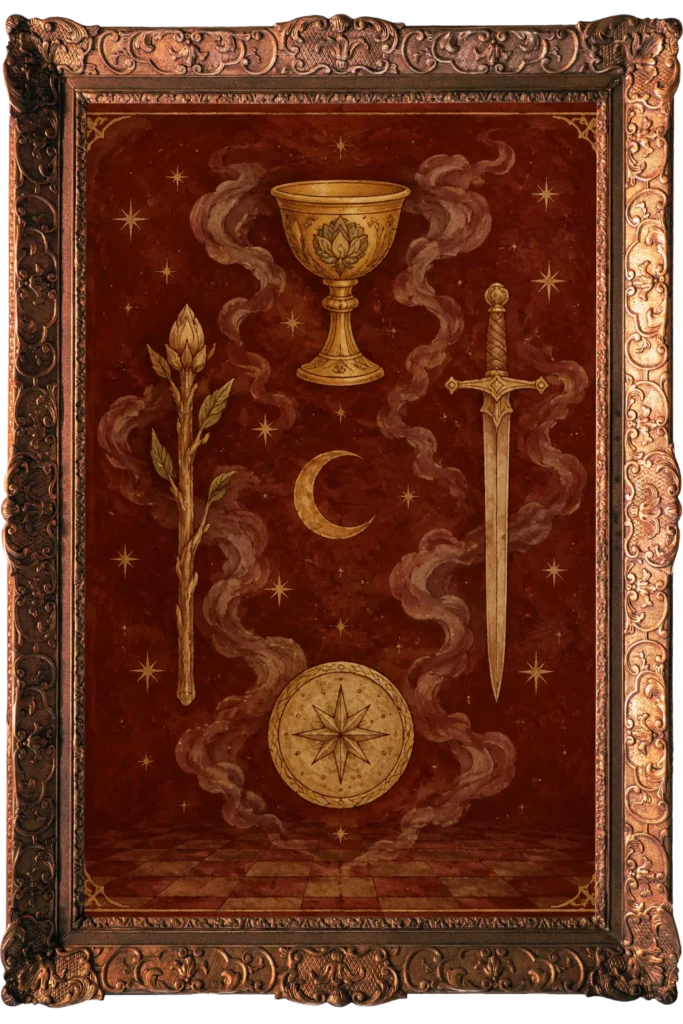
Each suit of the Minor Arcana covers one area of life and has 14 cards: Ace to 10 plus 4 court cards.
| Suit | Element | Area of life | Ask |
|---|---|---|---|
| Cups | Water | Emotions, love and relationships | “How does it feel?” |
| Wands | Fire | Passion, drive and action | “What lights me up?” |
| Swords | Air | Thoughts, conflict and truth | “What do I think?” |
| Pentacles | Earth | Money, work, body and home | “What’s real and solid?” |
Memory trick: a cup holds feelings, a wand sparks a fire, words cut like swords and pentacles are coins, so money and matter.
The Court Cards
Court cards are the ones beginners find hardest. Think of them as 4 stages of the same energy.
- 1PageThe student
Curious, new, still learning
- 2KnightThe chaser
Moving fast toward what they want
- 3QueenMastery within
Calm, caring, emotionally wise
- 4KingMastery out in the world
Steady, in charge, leading
Same suit, same energy, 4 stages of growing into it.
When you’re ready, Court Cards Explained has the simple trick that ends the confusion. And one reassurance for now: if you ever pull the Death card, breathe. It does not mean death. It means endings and transformation. Here’s exactly what it means: The Death Card Doesn’t Mean Death.
Cleansing and Connecting With Your Deck
Let’s take the anxiety out of this one too. Cleansing is optional. Nothing bad happens if you skip it. But a small ritual before your first reading does something useful. It slows your mind down and marks the moment as yours.
Pick one and take 2 minutes:
All 5 methods and whether you even need them are in How to Cleanse a Tarot Deck.
Connecting with your deck: flip through all 78 cards once, slowly. Set aside the ones that make you feel something, whether it’s curiosity, warmth or discomfort. These are your first teachers. Some people like to keep the deck near the bed for a week. Wondering if anyone else may touch it? Here’s the honest answer: Can Someone Else Touch Your Tarot Deck?. And for an old, broken or unwanted deck, read what to do with it. People ask this more than you’d think.
Your First Reading Step by Step
Here we go. Block 20 minutes. You’re going to do a real 3 card reading before you finish this section.
Step 1 · Ask a good question
This is 80% of the quality of any reading. Closed questions give confusing readings. When a reading feels muddled the question is usually why. Why Your Tarot Readings Make No Sense covers the rest.
The formula: What do I need to see, understand or consider about ___ right now? The full method, with 50 ready questions, is in How to Ask Tarot Questions That Get Clear Answers.
Step 2 · Ground yourself for 30 seconds
Feet on the floor. 3 slow breaths. Hold the deck. You’re not raising vibrations. You’re just moving from scattered mode to noticing mode.
Step 3 · Shuffle with the question in mind
Shuffle however feels natural: overhand, riffle or the wash, where you spread the cards on the table and swirl them. There’s no wrong way. Stop when it feels done. Trust that instinct, because it’s the first muscle you’re training. If cards jump out while you shuffle, don’t panic. It has a real answer: What It Means When Cards Fall Out While Shuffling.
Step 4 · Pull 3 cards
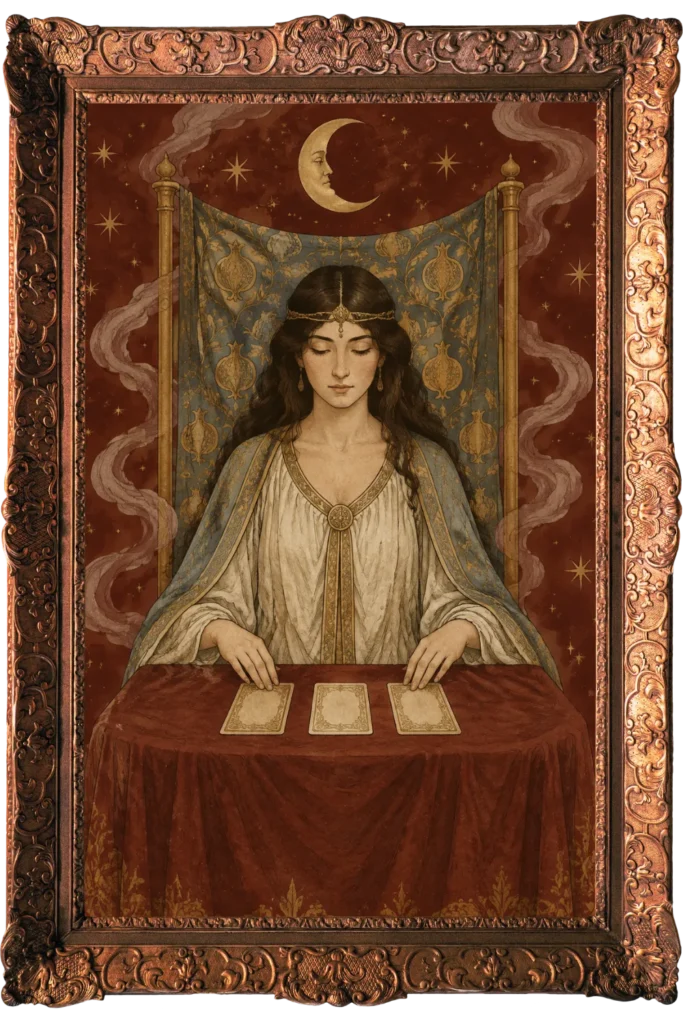
Cut the deck or simply take the top 3. Lay them left to right. Don’t look up any meanings yet.
Step 5 · Look first, define second
Before any book or website, including this one, look at the pictures. What’s happening in each one? What’s the mood, the light, the direction of movement? Write 1 word per card, from gut feeling only. This step, picture before meaning, is what separates people who learn tarot in a month from people who stay stuck in guidebooks for years.
Step 6 · Read the cards as one story
For your first spread, give each card a job.
Even a rough story is a real reading. Congratulations. You just read tarot.
This whole section on 8 printable pages. The ritual, the question rewrite, 3 easy spreads and a reading log to keep next to your deck.
Send Me the Reading Kit →The Question Rewriter – Try It Now
Not sure how to word your question? Pick what it’s about and what’s really worrying you. The rewriter turns it into 3 open questions the cards can actually answer and suggests the spread to use.
2 quick choices. You get 3 open questions to ask your cards and the spread that fits them.
No sign up, no email. Nothing you choose is saved or sent anywhere.
The 3 Easiest Spreads to Start With
1 spread is all you need for your first month, but here are 3, from simplest to most ambitious.
One question about the day ahead, every morning. 4 minutes that build skill faster than anything else.
Read next →Perfect for work and money questions when you need a clear next step.
Read next →Most useful about yourself. Reading about someone else raises real questions.
Read next →The Daily Three is the method behind our promise that you can learn the deck quickly. See the realistic timeline in How Long Does It Take to Learn Tarot?. For love questions, the Tarot Cards as Feelings library explains every card in a love reading, from the dreamy Knight of Cups to the confusing Moon card.
Want more layouts? We keep a growing collection: 27 Three Card Tarot Spreads, plus seasonal ones like the Birthday Tarot Spread for reading your year ahead.
The 7 Most Common Beginner Mistakes and How to Fix Them
We collected these from years of watching beginners struggle and from being one. Which one is yours?
One more honest note about reading for others. You can absolutely read tarot for yourself and most of your readings will be just that. Reading about someone who isn’t in the room is a different story and Can You Do a Tarot Reading About Someone Else? explains why.
Tarot FAQ
Key Takeaways
- Tarot is a skill you learn, not a psychic gift. Your first real reading can happen today.
- 1 deck, 1 open question and 3 cards are the entire starter kit.
- Look at the picture before you look up the meaning. This is how real reading ability grows.
- Ask open questions like “What do I need to understand about this?” instead of yes or no verdicts.
- Scary cards like Death and The Tower describe change, not doom. Read them as information.
- 10 minutes a day beats 2 hours once a week. The Daily Three is your practice engine.
Where to Go Next
Your journey from here, in recommended order:
Every card in plain words, the spreads from this guide and the reading method you just learned, in one book you can keep next to your deck.
Get the Ebook →The deck in your drawer has been waiting patiently. Go say hello.